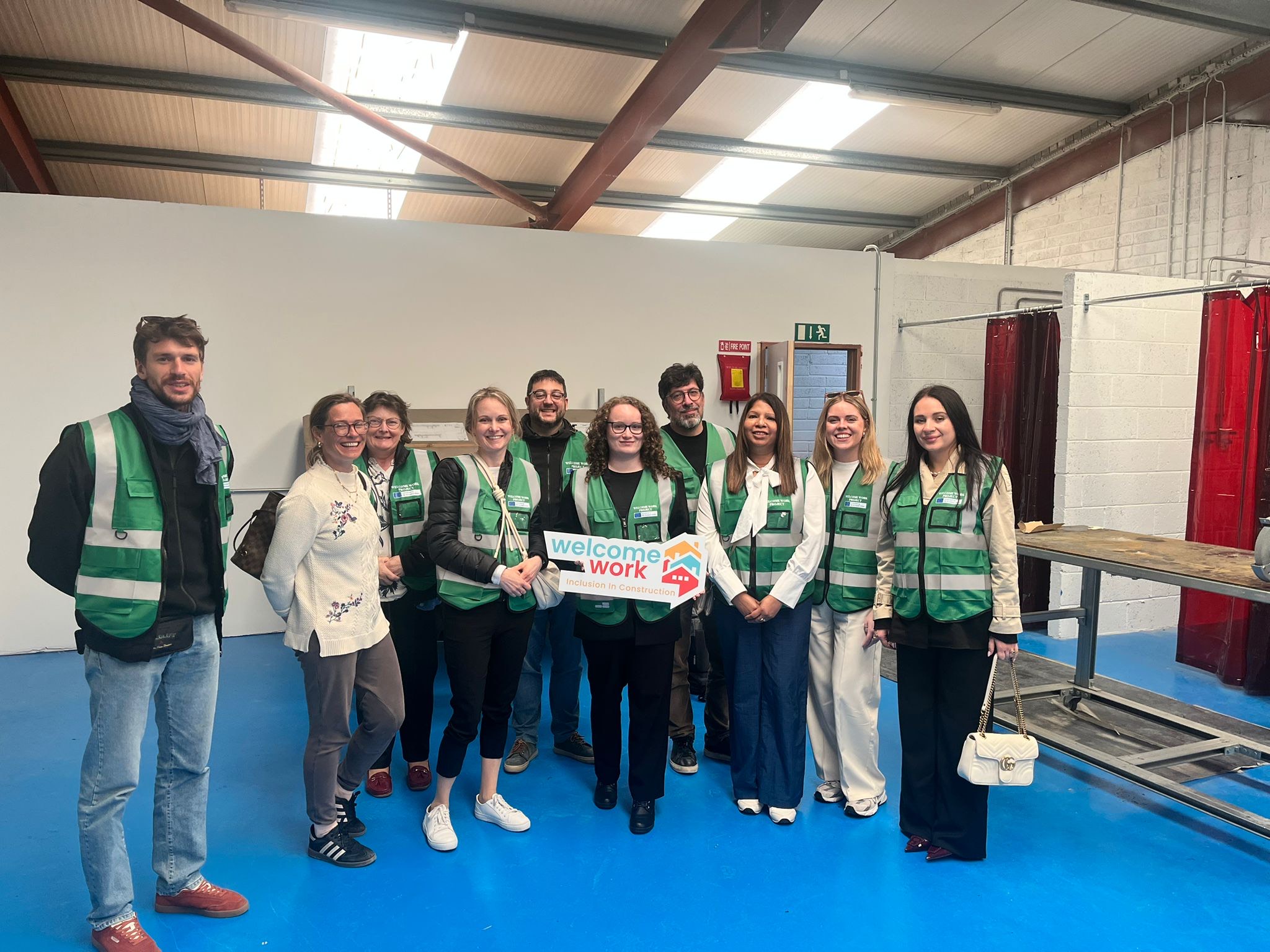
As the Welcome Work project comes to an end, it’s the perfect moment to reflect on the journey, achievements, and impact that this European Erasmus+ initiative has created across five partner countries. Designed to support the integration of refugees into the construction sector, which is a field facing critical labour shortages across Europe – the project has delivered practical, innovative resources that are already helping educators, employers, and refugees themselves.
From digital toolkits to collaborative training solutions, Welcome Work has made meaningful strides toward social inclusion and employment accessibility for people rebuilding their lives in Europe.
The construction sector across Europe is experiencing a significant shortage of skilled labour—just as the continent faces a major influx of refugees displaced by conflicts, including the war in Ukraine. This dual challenge created a powerful opportunity: to help refugees access meaningful employment while simultaneously addressing skills gaps in the construction industry.
Over its duration, Welcome Work produced several major outputs designed to support both refugees and the organisations that welcome them. These resources were created collaboratively by partners from Denmark, Spain, France, Ireland, and Poland.
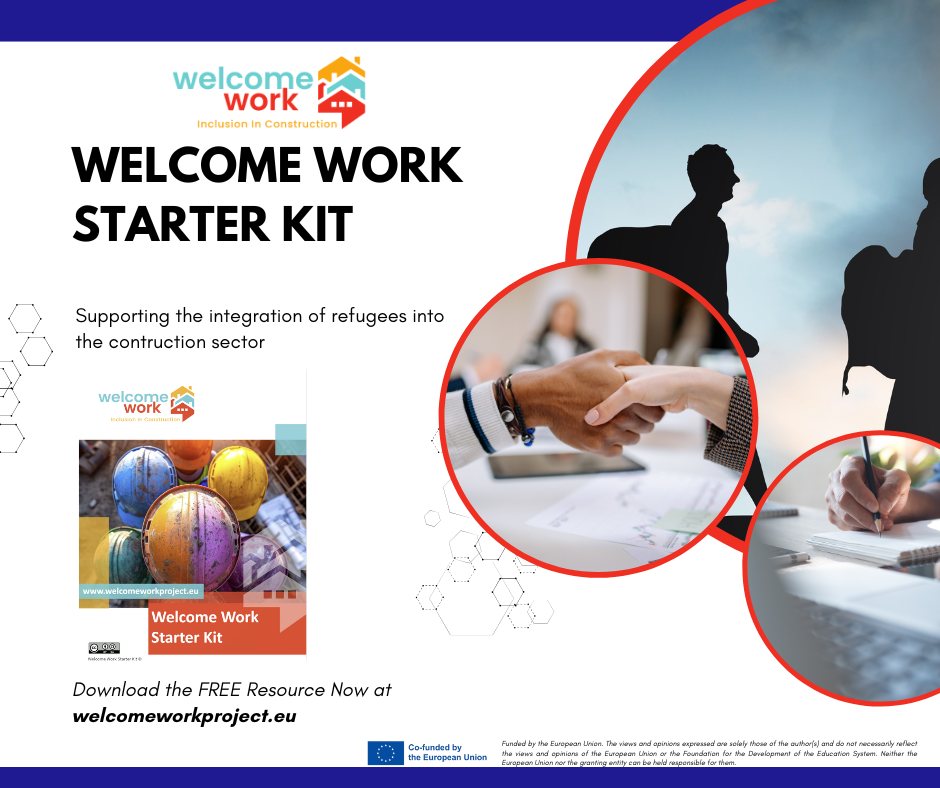
1. The Welcome Work Starter Kit
A comprehensive digital resource developed to guide VET (Vocational Education and Training) directors, trainers, educators, and support staff.
The Starter Kit offers:
- Practical tools and templates
- Real-world examples
- Guidance for training centres to better support refugee learners
This kit empowers VET organisations to play a more effective role in refugee integration and employment readiness.
2. The Good Practice Compendium
Aimed at employers in the construction sector, this compendium provides:
- Articles and case studies from participating countries
- Insights on skills evaluation
- Cultural integration strategies
- Step-by-step instructions for promoting inclusive workplaces
This resource helps employers create safe, supportive, and productive environments for refugee workers.
3. The Mobile Training APP
The app is intended for people who are new to construction or new to the country and need straightforward support. It is suitable for those with limited language skills, low digital confidence, or irregular schedules.
This programme increases:
- Understanding the right to work
- Exploring common job roles
- Finding training options and exploring upskilling
The app is also designed to be useful for educators, support workers, and community organisations who need a reliable, user-friendly resource to guide newcomers as they take their first steps into construction.
Throughout the project, partners met regularly to evaluate progress, refine outputs, and ensure each resource was grounded in practical needs.
At the final in-person meeting here in Leitrim, Ireland, partners reviewed:
- Completion of the Starter Kit
- Advancements on the Good Practice Compendium
- Strategies for strengthening dissemination and reach
- Use of social media and community engagement
- Opportunities to collaborate with additional training facilities, including a visit to a state‑of‑the‑art mechanical and electrical training centre
The Welcome Work project has laid a strong foundation for future integration efforts by:
- Empowering training providers
- Supporting employers
- Enhancing the employability of refugees
- Strengthening transnational collaboration
- Filling critical labour gaps in a key economic sector
With resources freely accessible on the project website, these outputs will continue supporting integration pathways long after the project’s formal end.
As Europe continues to welcome new residents seeking safety and opportunity, initiatives like Welcome Work demonstrate the tangible power of coordinated, compassionate, and practical action.
The project may be ending, but the work, and its impact will continue to grow.
You can find out more about Welcome Work on the website: https://welcomeworkproject.eu/