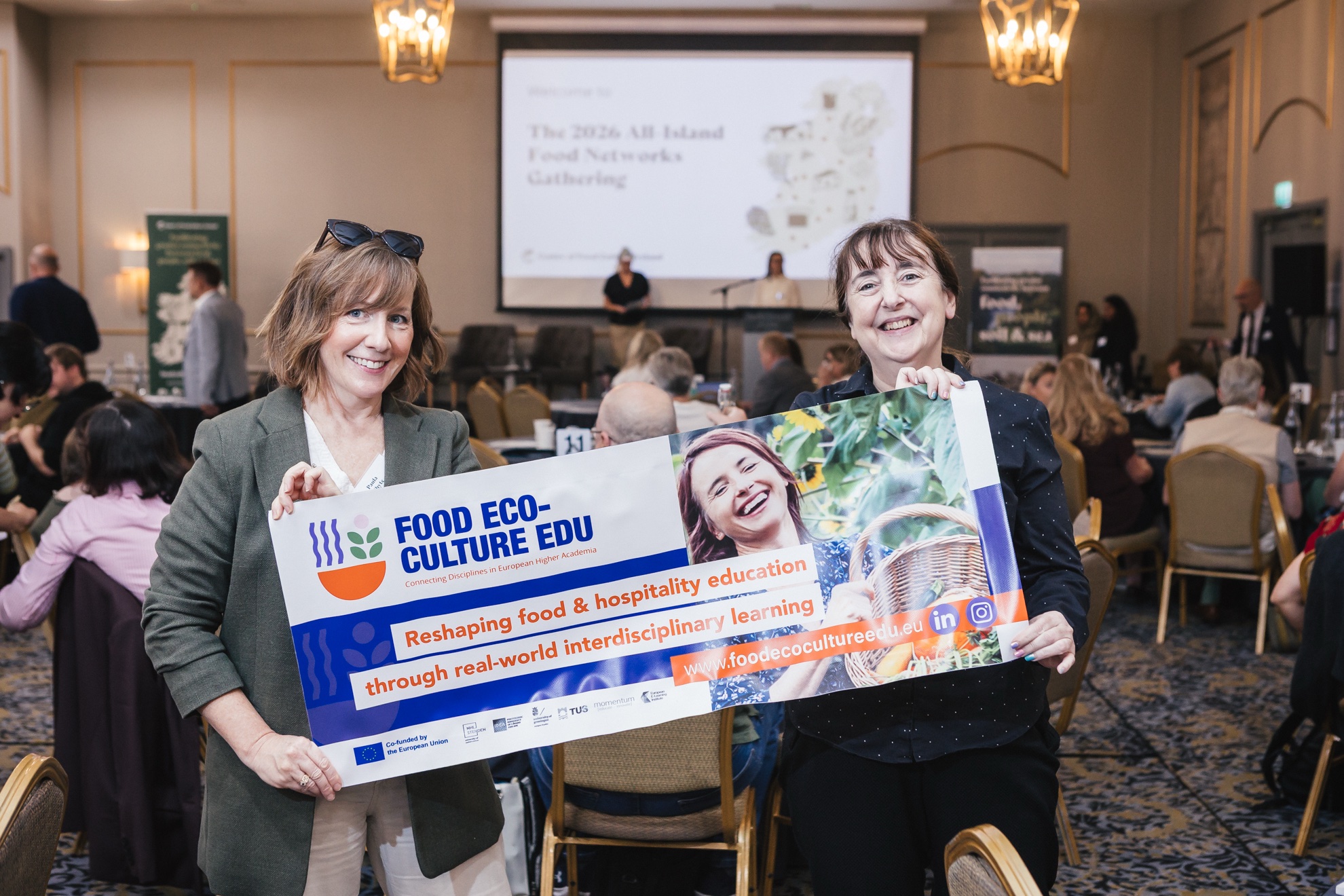
By Paula Whyte, Momentum.
Last week, I had the privilege of representing the Food Eco-Culture Edu (FECE) project in the heart of the Midlands for an inspiring event: the All-Island Food Networks Gathering 2026, hosted by the Centre for Food Culture Ireland in Portlaoise.
Bringing together over 200 passionate attendees from every corner of the island, the room was buzzing with shared energy, vision, and a collective commitment to shaping the future of Irish food. From educators, chefs, and hospitality specialists to regional network leaders, artisan producers, and policy influencers, the day centred on a vital premise: our food systems and their long-term resilience are strongest when we educate, collaborate, and innovate together.
The day was chaired by renowned Irish food journalist, author, and broadcaster Suzanne Campbell. A former producer of RTÉ’s Ear to the Ground and founder of the Irish Food Writing Awards, Suzanne brought her deep expertise in Irish agriculture, rural affairs, and food supply chains to the stage, expertly guiding the panel discussions and keeping the conversation sharp, engaging, and focused on real-world solutions.
Here are my key takeaways from a thought-provoking day of discussions and why these conversations directly intersect with the FECE project.
Key Takeaways & Theme Connections
- Education and Awareness: Closing the Critical Knowledge Gaps
Unsurprisingly, education emerged as the single most critical pillar throughout the discussions. In an era where food systems face carbon challenges, rising costs, and shifting consumer expectations, speakers highlighted a glaring issue: a significant gap in awareness regarding food provenance, culture, and sustainable food practices.
To build a resilient food and hospitality sector, consumers, future chefs, and hospitality leaders must understand the true value, culture, and care required across the food supply chain. Addressing this educational gap isn’t just nice to have; it is essential for driving systemic change and supporting regional food economies.
- Regional Identity, Culinary Tourism & Network Collaboration
The role of regional food heritage in connecting education with practical tourism experiences was another central theme. Connecting learners (and consumers) directly to local culture and regional food traditions builds an emotional and practical appreciation for local produce.
It was wonderful to catch up with Val Robus, who was representing Taste Leitrim https://tasteleitrim.com/. Networks like Taste Leitrim exemplify the power of regional food stories, showing how local collaboration between producers, hospitality businesses, and communities can create authentic, sustainable food tourism experiences.
Looking toward future opportunities, Fáilte Ireland shared insights into their upcoming Culinary Tourism Strategy, reinforcing how regional food identities and sustainable food practices can drive long-term economic growth when backed by strong educational foundations.
- Renowned Voices on Sustainable Food Systems
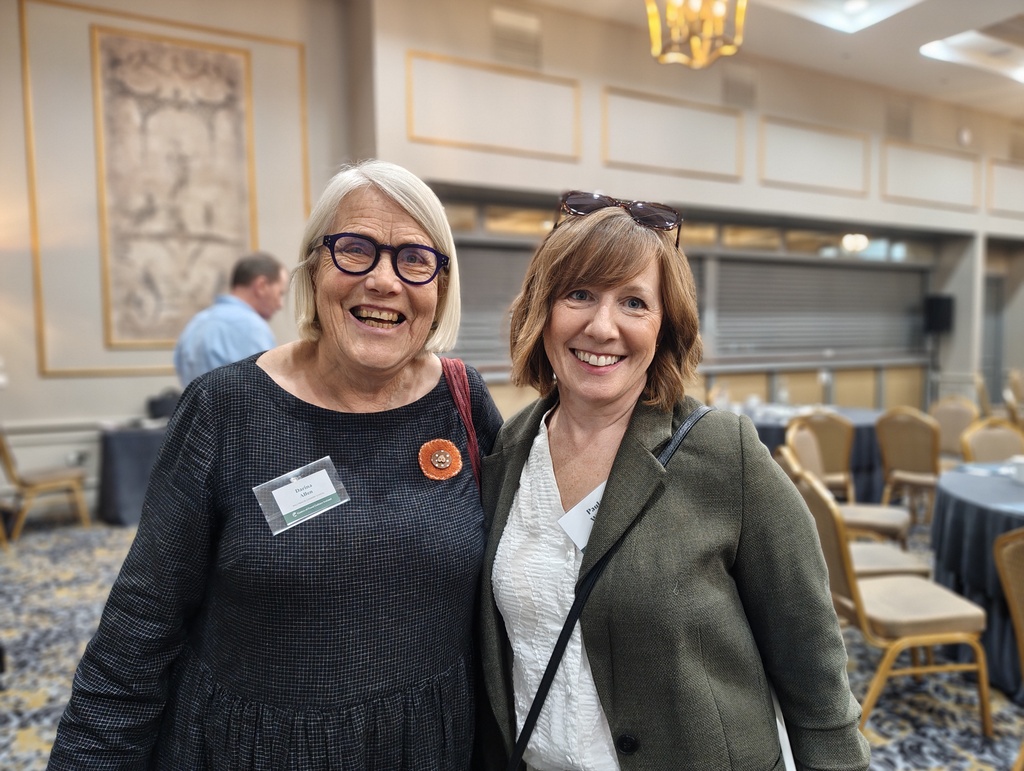
Championing the need for systemic educational reform and fair value across the supply chain, renowned chef and educator Darina Allen of Ballymaloe spoke out passionately about the realities facing local producers and Dee Laffin and others highlighted the urgent need for comprehensive food education, waste reduction, and a deeper respect for food culture across both formal education and industry practice.
Why FECE Belongs at the Table:
Attending the gathering was a powerful reminder of why the Food Eco-Culture Edu (FECE) project is so timely and necessary. The systemic challenges voiced during the gathering- interdisciplinary skills gaps, the need for climate-conscious business models, and better integration between regional food heritage and hospitality management- align directly with FECE’s core objectives.
- Bridging the Interdisciplinary Skills Gap: Attendees highlighted a lack of educational approaches connecting culture, health, economics, and sustainability. FECE delivers a research-informed curriculum specifically designed to bridge these exact domains across higher education, vocational training, and hospitality management.
- Translating Research into Action: FECE operationalises research into 6 core modules and practical Living Lab environments. Sharing FECE with regional network representatives opens opportunities to connect local food networks with our Living Labs as real-world case studies and educational partners.
- Elevating Regional Heritage & Storytelling: Stakeholders at the event called for stronger connections between regional food culture and guest experiences. FECE modules directly address food heritage, local product storytelling, circular economy practices, and climate-conscious business models, equipping future industry leaders to champion regional food ecosystems.
A huge thank you to the Centre for Food Culture Ireland for hosting such an inspiring event. The future of Irish food relies on collaboration across education, regional networks, and the hospitality sector. Through the FECE project, we are proud to play our part in building a high-quality, research-informed educational foundation for the next generation of food and hospitality leaders
Discover more about the FECE project and explore our curriculum modules at: https://foodecocultureedu.eu/